€21.88 Ursprünglicher Preis war: €21.88€13.88Aktueller Preis ist: €13.88.
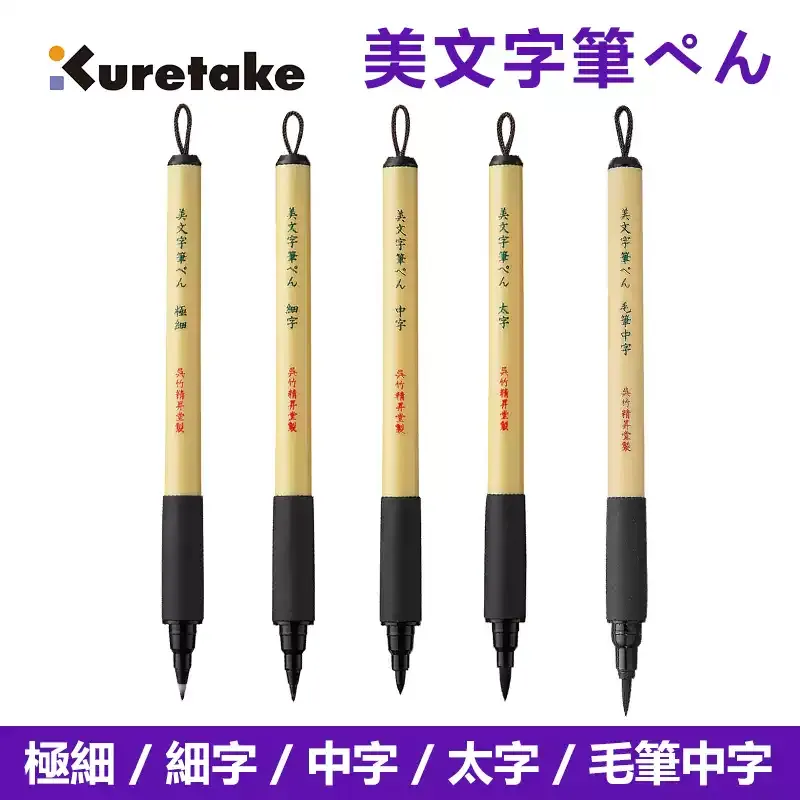
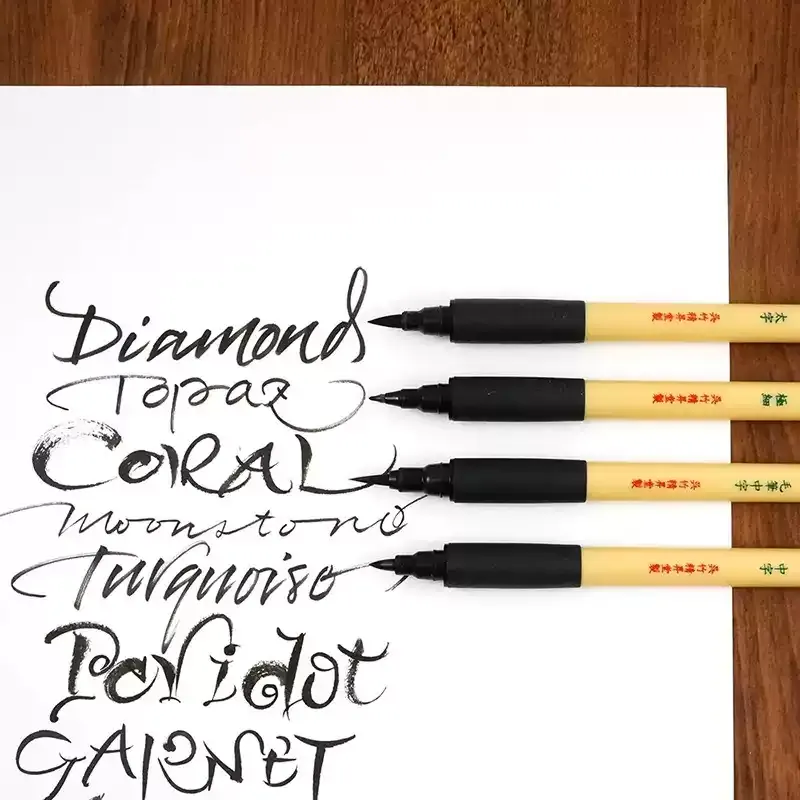
One ink. Five tips. The complete vocabulary of brush-pen line expression in a single set. The Kuretake Bimoji Brush Pen 5-Pen Set brings together five tip specifications from Kuretake’s Bimoji — 「美文字」, “beautiful characters” — line in one coordinated set: Ultra Fine, Fine, Medium, Bold, and Brush Medium. Each pen carries the same black water-based pigment ink — dense, dark, water-resistant when dry, and archival-quality — through a different tip format calibrated to a specific scale of writing and drawing work. Ultra Fine for the finest detail and densely written text; Fine for standard everyday calligraphy practice and journal writing; Medium for regular-size characters and confident strokes; Bold for large characters, emphasis marks, and title writing; and Brush Medium — the traditional flexible brush tip — for the full expressive range of brushstroke calligraphy that the hard-tip pens approximate and the brush tip delivers directly. Together, the five pens cover every writing scale and expressive register from a dense annotation line to a full calligraphic brushstroke. Made in Japan by Kuretake, a Nara-based manufacturer with over 120 years of ink and brush production.
Five tips. One ink. Every line from the thinnest detail to the boldest brushstroke.
The Bimoji line’s design goal is to make beautiful, expressive character writing accessible to everyone — not just those trained in traditional brush calligraphy (書道). The 5-pen set completes this goal by providing the full size range in a single purchase:
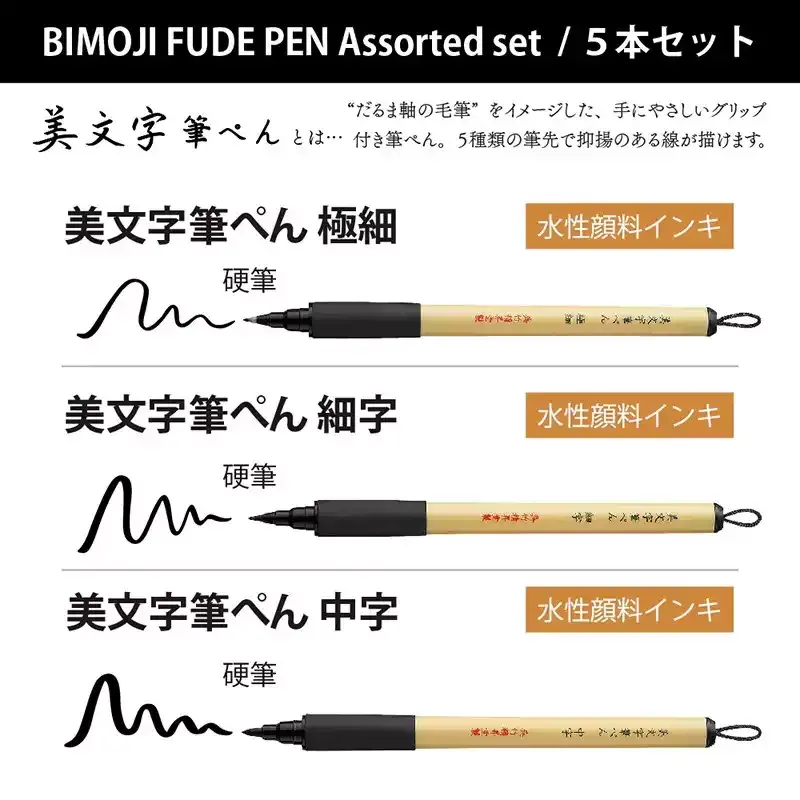
Ultra Fine (極細)
The finest tip in the set — produces a hair-width line at light pressure. The Ultra Fine is the tool for: the smallest, most densely written characters; fine annotation alongside larger primary text; crosshatching and texture detail in illustration; marginalia and index writing in journals; and any application where the thinnest possible ink line is the correct choice. In calligraphy practice, the Ultra Fine develops control and precision at the most demanding scale.
Fine (細字)
The standard fine-line tip — one step broader than Ultra Fine but still in the fine-line register. The Fine is the everyday workhorse of the set: suitable for standard journal handwriting, regular-size calligraphy practice characters on A4 and B5 practice sheets, envelope addressing, and the primary text of a journal spread or letter. For users who use only one tip from the set for daily writing, Fine is typically that tip.
Medium (中字)
The balanced mid-size tip — the centre of the set’s range. The Medium is suited for: regular-size character writing at standard notebook scale; primary text in hand-lettering compositions; confident writing that reads clearly at arm’s length without requiring the large scale of the Bold tip; and calligraphy practice at the scale used in most beginner and intermediate practice book formats. The Medium is the correct choice when neither Fine nor Bold is specifically indicated.
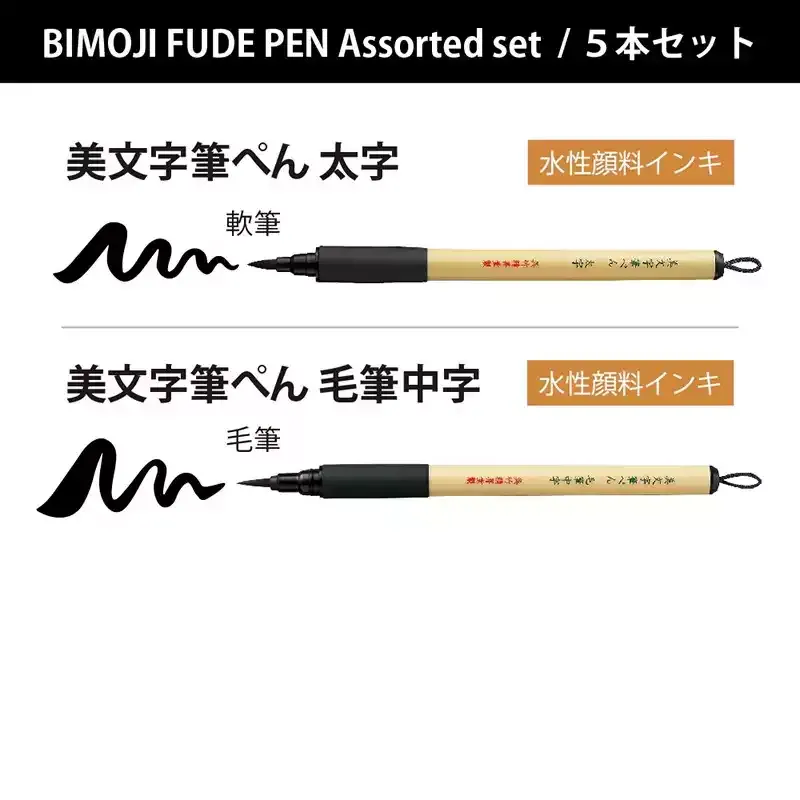
Bold (太字)
The broadest hard tip in the set — for large characters, titles, sign writing, and any application where the writing must be read at distance or make a strong visual statement on the page. The Bold is the correct tip for: calligraphy practice at large character scale; journal and planner headers and monthly titles; addressing large envelopes or parcels; producing calligraphy for framing or display; and any brushstroke that should dominate the page rather than sit within it. The Bold tip has the most expressive line-width variation of the hard tips because the broader contact area amplifies the effect of pressure changes.
Brush Medium (毛筆中字)
The traditional flexible brush tip at medium size — the fifth pen in the set that steps beyond the controlled, predictable output of the hard tips into the fully expressive range of traditional brush calligraphy. The Brush Medium’s flexible fibre tip flexes and splays under pressure in a way that more closely replicates a traditional calligraphy brush: the response to pressure and angle is more dynamic and the line width range is broader than any of the hard tips. This is the pen for practitioners who have developed pressure-control awareness and want to explore the full expressive range of brushstroke calligraphy — the tapered stroke that thins to a point, the confident wide stroke that holds its width, and the natural variation that distinguishes hand-made brush calligraphy from mechanically consistent output.
The single black water-based pigment ink shared across all five pens is not incidental — it is the thread that makes the set function as a system:
A: For beginners, the Fine (細字) or Medium (中字) hard-tip pens are the most accessible starting points. The hard tip produces consistent, predictable output that responds to pressure in a controlled, forgiving way — the line width varies with pressure but the tip always returns to its base shape, so errors in pressure application produce small, recoverable variations rather than large, unexpected line width changes. Begin with Fine or Medium for standard-size character practice on ruled or grid practice sheets. Once pressure control is comfortable at that scale, expand to Ultra Fine for detail work, Bold for large characters, and finally the Brush Medium for the full flexible brush experience.
A: The hard-tip pens (Ultra Fine, Fine, Medium, Bold) have a firm fibre tip that holds its shape under writing pressure and returns to its natural form after each stroke. They produce calligraphic line variation through pressure response, but the range of variation is bounded and predictable — the maximum line width is determined by the tip size, and the tip does not splay significantly beyond its natural width. The Brush Medium has a soft, flexible fibre tip that splays and flexes under pressure in a way that closely replicates a traditional calligraphy brush — the line width range is broader, the response to pressure changes is more dynamic, and the technique demands are higher. For beginners and casual users, the hard tips are more forgiving. For practitioners who want the full expressive range of traditional brush calligraphy, the Brush Medium is the step beyond the hard tips.
A: Yes — this is one of the primary design applications of the Bimoji line. The set is specifically suited to 硬筆書道 (hard-pen calligraphy) practice, which is a recognised discipline within Japanese calligraphy education that uses hard-tip brush pens rather than traditional brush-and-inkstone. The hard tips (Ultra Fine through Bold) are the correct tools for hard-pen calligraphy practice at various character scales. The Brush Medium extends into the territory of traditional brush calligraphy practice. The set covers the full range of Kuretake Bimoji tip sizes used in Japanese calligraphy education from elementary school through adult practice.
A: Yes. The black water-based pigment ink is water-resistant once fully dry. Allow the ink to dry completely — typically 1–2 minutes on standard paper at room temperature — before applying watercolour or water-based washes. Once dry, a watercolour wash applied over the ink lines will not dissolve or bleed the ink. This makes the Bimoji set suitable for the standard illustration workflow of inking first and adding colour washes over the completed ink drawing. Do not apply washes before the ink has fully set — while still wet, the pigment ink remains water-soluble.
A: The Bimoji set works well on most standard writing and practice papers: calligraphy practice sheets, uncoated notebook paper, journal paper (70gsm and above), smooth Bristol, and standard printer paper. For the best line quality from the hard tips, smooth, moderately absorbent paper allows the tip to flex and respond cleanly. Very textured or rough paper may limit the fine tips’ ability to produce hair-width lines. For the Brush Medium’s wet-on-wet or wash work, heavier paper (90gsm and above) resists buckling better under wet ink application. Tomoe River paper (52gsm) handles the pigment ink well at light application pressure; heavy brush strokes on thin paper will cause cockle.
A: A practical guide to tip selection by application:
Ultra Fine — dense annotation, marginalia, the smallest characters, crosshatching detail.
Fine — everyday journal handwriting, standard calligraphy practice, envelope addressing.
Medium — regular-size character writing, hand-lettering body text, standard notebook writing at larger scale.
Bold — page headers, large characters for display, sign writing, emphasis marks that dominate the page.
Brush Medium — expressive brushstroke calligraphy, full brush technique practice, the most dynamic and varied linework in the set.
The correct tip is the one whose natural line weight at medium pressure matches the scale of the characters being written on the paper being used.
A: Yes — the Kuretake Bimoji 5-pen set is one of the most considered and complete gifts for anyone interested in Japanese calligraphy, brush pen writing, or expressive handwriting. The set provides the full tip-size progression in a single purchase, which is more useful and more thoughtful than a single pen — the recipient has the complete system rather than one point of entry. The Kuretake brand carries genuine professional credibility in the calligraphy and illustration community. The black pigment ink across all five pens means the set is immediately usable for practice without any additional ink or supplies. It presents well as a gift alongside a calligraphy practice book or a quality journal.
A: The Kuretake Bimoji brush pens are pre-filled, self-contained pens that are not designed for user refilling. When the ink in a pen is exhausted, the pen is replaced. Ink longevity varies by tip size and use density: finer tips (Ultra Fine, Fine) use less ink per stroke and last longer than broader tips (Bold, Brush Medium) under equivalent use. For heavy, frequent use, having spare pens of the most-used tip sizes on hand is practical. Kuretake does produce some brush pen models with replaceable ink cartridges — if refillability is a priority, the Kuretake Fountain Brush Pen or cartridge-based models are the appropriate alternatives to the Bimoji series.